
5 Reasons Why Every Child Should Try Multiple Sports and Activities
Should your child try more than one sport? Swan Academy explains why trying multiple activities is one of the best things you can do for your child's physical and mental development.

5 Reasons Why Every Child Should Try Multiple Sports and Activities
One of the most common questions parents ask us at Swan Academy is whether their child should focus on one activity or try several. The honest answer, particularly for younger children, is that trying multiple sports and activities is one of the best things you can do for their development.
This is not just our opinion. It is backed by decades of coaching experience and a consistent pattern we see at Swan Academy -- the children who come to us having already tried swimming, football, dance or other activities tend to be more coordinated, more coachable and more confident than those who have had no previous physical activity at all.
Here are five reasons why encouraging your child to try multiple sports, with gymnastics as a brilliant foundation, is the smartest approach to their physical and mental development.
1. It Builds a Complete Physical Foundation
Different sports develop different physical qualities. Football builds cardiovascular fitness and lower body power. Swimming develops breath control, full-body coordination and endurance. Dance develops rhythm, spatial awareness and expression. Gymnastics develops strength, flexibility, coordination, balance and body control at a level that few other activities match.
When children try multiple activities they develop a much more complete physical foundation than any single sport can provide. They build different movement patterns, challenge their bodies in different ways and develop physical literacy that serves them for life -- in sport, in physical education at school and in their general health and wellbeing.
Gymnastics in particular is one of the best foundational sports a child can do because the physical qualities it develops transfer so well to everything else. Children who have done gymnastics are typically better at every other sport they try -- their coordination, body awareness and physical confidence give them a head start. This is why so many elite athletes across football, swimming, rugby and athletics had gymnastics as part of their early sporting diet.
2. It Develops Resilience and Adaptability
Every sport has its own challenges, its own learning curve and its own moments of frustration. A child who has only ever done one activity has only ever had to overcome one type of challenge. A child who has tried multiple sports has learned to adapt, to start from scratch, to be a beginner again and to push through difficulty in different contexts.
That adaptability is enormously valuable. Children who have experienced a variety of activities are generally more resilient when things get hard. They have learned that being a beginner is temporary, that effort leads to progress and that the feeling of mastering something new -- whatever that something is -- is worth the difficulty it took to get there.
At Swan Academy we see this regularly. Children who join us having already tried other sports tend to take instruction well, handle the challenge of learning new skills with patience and bounce back quickly when something does not go right. Those qualities come directly from having navigated different sporting environments before.
3. It Helps Children Find What They Love
Children cannot know what they love until they have tried it. A child who only ever does one activity from an early age may be excellent at it -- but they may also be missing the thing they would genuinely love if they only had the chance to experience it.
Trying multiple sports gives children the chance to discover what genuinely excites them. Some children try gymnastics and are immediately captivated -- they want to come back every week, they practise at home, they ask questions about the next level. Others try gymnastics and realise their passion lies elsewhere. Both outcomes are equally valid and equally useful.
The goal of sport in childhood is not to produce specialists as quickly as possible. It is to develop a love of movement and physical activity that lasts a lifetime. Children who are allowed to explore and discover their passion are far more likely to stay active into adulthood than those who are pushed into a single activity before they have had the chance to find out what they actually enjoy.
At Swan Academy we offer both gymnastics and dance under one roof, specifically because many children are interested in both. Trying both gives them a richer experience and often produces better gymnasts and better dancers as a result.
4. It Supports Mental Health and Confidence
The mental health benefits of sport are well established. Physical activity reduces anxiety, improves mood, builds self-esteem and gives children a sense of competence and control. What is less often discussed is how trying multiple activities amplifies these benefits.
Each new activity a child tries is a new opportunity to build confidence. Every time they start something new and push through the initial difficulty, they demonstrate to themselves that they are capable of learning. Every time they achieve something in a new context -- a first cartwheel, a first goal, a first length of the pool -- they add to their sense of who they are and what they can do.
Children who have tried multiple sports tend to have a broader and more robust sense of their own capability. They are not dependent on being good at one specific thing for their confidence. They have evidence from multiple areas of their lives that they can take on a challenge and succeed.
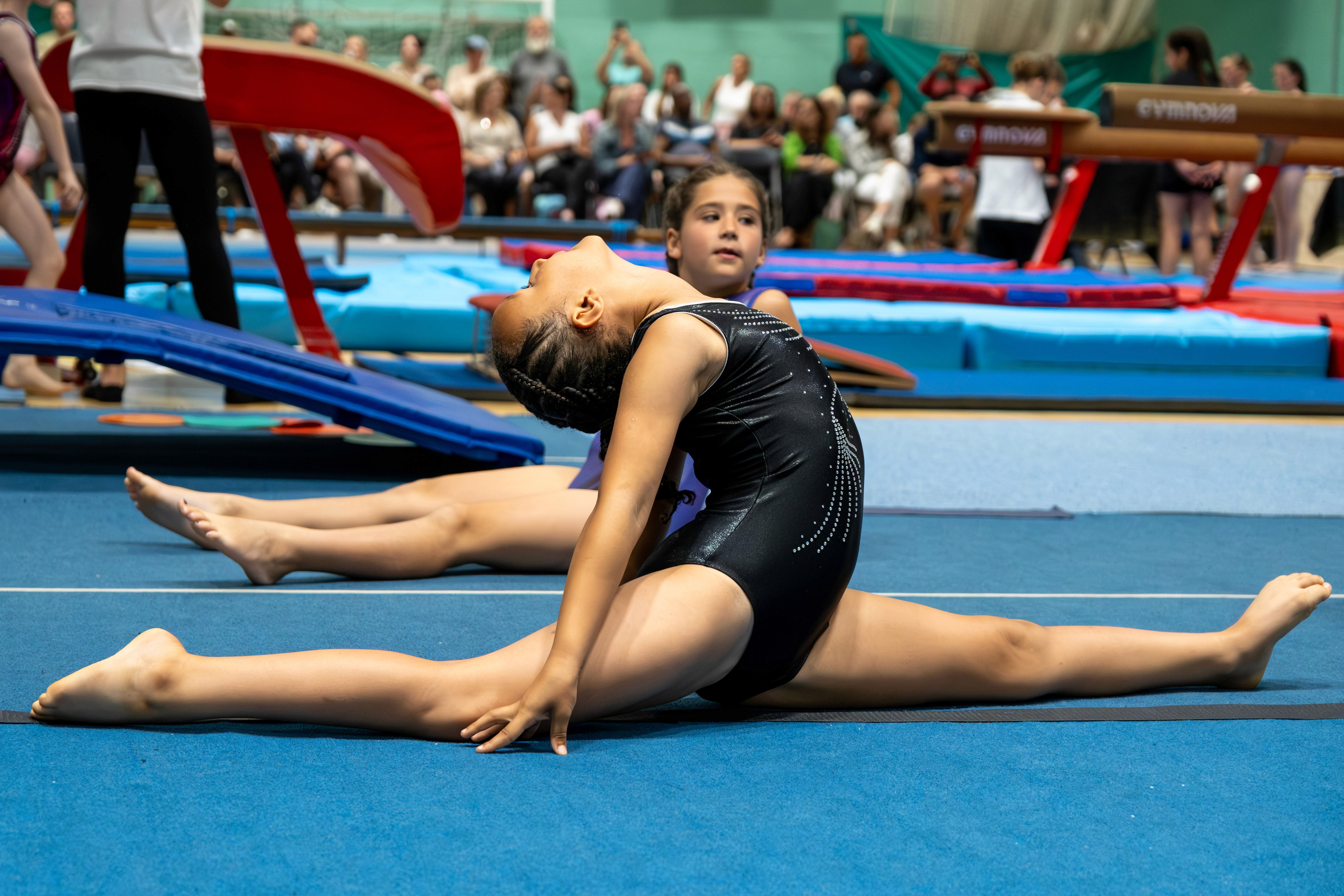
Gymnastics contributes to this in a particularly meaningful way because the skills are visibly impressive and the achievement is very tangible. A child who lands their first back walkover has done something they could not do before. That feeling of earned achievement is one of the most powerful confidence builders in sport.
5. It Reduces the Risk of Burnout and Overuse Injury
Early specialisation in a single sport carries real risks -- both physical and psychological. Physically, repeating the same movement patterns over many hours every week increases the risk of overuse injuries, particularly in growing bodies. Psychologically, the pressure that comes with early specialisation and intense focus on a single discipline can lead to burnout, loss of enjoyment and eventually dropping out of sport altogether.
Children who try multiple activities spread their physical load across different movement patterns, reducing strain on any one part of the body. They also maintain a broader relationship with sport -- it remains fun and varied rather than becoming a source of pressure and obligation.
This does not mean children should never specialise. At Swan Academy our Junior Squad gymnasts train seriously and with real commitment. But even our most dedicated competitive gymnasts benefit from having had a broad sporting background before focusing fully on gymnastics. The physical foundations they built across multiple activities make them better, more robust athletes.
The best time to specialise is when a child has found what they genuinely love, developed broad physical foundations and demonstrated the attitude and commitment that competitive training requires. That time is different for every child, and it should always be child-led.
Why Gymnastics Is the Best Starting Point
If your child is going to try one activity as a foundation before exploring others, gymnastics is the one we would recommend -- and not just because we are a gymnastics club.
The physical qualities gymnastics develops -- strength, flexibility, coordination, balance, body awareness and spatial control -- are the foundation for almost every other sport. Children who have done gymnastics are better prepared for football, swimming, athletics, dance, martial arts and virtually any other physical activity they go on to try.
Swan Academy offers gymnastics and dance for children from age 4 at Nobel School Sports Centre in Stevenage. Whether your child wants to try one class or build a broader sporting life, we have a programme for them.
Book a taster session today or contact us at info@swangymnastics.co.uk.
Swan Academy. Nobel School Sports Centre, Mobbsbury Way, Stevenage, SG2 0HS. Phone: +44 7418 610429.
5 Reasons Why Every Child Should Try Multiple Sports and Activities
One of the most common questions parents ask us at Swan Academy is whether their child should focus on one activity or try several. The honest answer, particularly for younger children, is that trying multiple sports and activities is one of the best things you can do for their development.
This is not just our opinion. It is backed by decades of coaching experience and a consistent pattern we see at Swan Academy -- the children who come to us having already tried swimming, football, dance or other activities tend to be more coordinated, more coachable and more confident than those who have had no previous physical activity at all.
Here are five reasons why encouraging your child to try multiple sports, with gymnastics as a brilliant foundation, is the smartest approach to their physical and mental development.
1. It Builds a Complete Physical Foundation
Different sports develop different physical qualities. Football builds cardiovascular fitness and lower body power. Swimming develops breath control, full-body coordination and endurance. Dance develops rhythm, spatial awareness and expression. Gymnastics develops strength, flexibility, coordination, balance and body control at a level that few other activities match.
When children try multiple activities they develop a much more complete physical foundation than any single sport can provide. They build different movement patterns, challenge their bodies in different ways and develop physical literacy that serves them for life -- in sport, in physical education at school and in their general health and wellbeing.
Gymnastics in particular is one of the best foundational sports a child can do because the physical qualities it develops transfer so well to everything else. Children who have done gymnastics are typically better at every other sport they try -- their coordination, body awareness and physical confidence give them a head start. This is why so many elite athletes across football, swimming, rugby and athletics had gymnastics as part of their early sporting diet.
2. It Develops Resilience and Adaptability
Every sport has its own challenges, its own learning curve and its own moments of frustration. A child who has only ever done one activity has only ever had to overcome one type of challenge. A child who has tried multiple sports has learned to adapt, to start from scratch, to be a beginner again and to push through difficulty in different contexts.
That adaptability is enormously valuable. Children who have experienced a variety of activities are generally more resilient when things get hard. They have learned that being a beginner is temporary, that effort leads to progress and that the feeling of mastering something new -- whatever that something is -- is worth the difficulty it took to get there.
At Swan Academy we see this regularly. Children who join us having already tried other sports tend to take instruction well, handle the challenge of learning new skills with patience and bounce back quickly when something does not go right. Those qualities come directly from having navigated different sporting environments before.
3. It Helps Children Find What They Love
Children cannot know what they love until they have tried it. A child who only ever does one activity from an early age may be excellent at it -- but they may also be missing the thing they would genuinely love if they only had the chance to experience it.
Trying multiple sports gives children the chance to discover what genuinely excites them. Some children try gymnastics and are immediately captivated -- they want to come back every week, they practise at home, they ask questions about the next level. Others try gymnastics and realise their passion lies elsewhere. Both outcomes are equally valid and equally useful.
The goal of sport in childhood is not to produce specialists as quickly as possible. It is to develop a love of movement and physical activity that lasts a lifetime. Children who are allowed to explore and discover their passion are far more likely to stay active into adulthood than those who are pushed into a single activity before they have had the chance to find out what they actually enjoy.
At Swan Academy we offer both gymnastics and dance under one roof, specifically because many children are interested in both. Trying both gives them a richer experience and often produces better gymnasts and better dancers as a result.
4. It Supports Mental Health and Confidence
The mental health benefits of sport are well established. Physical activity reduces anxiety, improves mood, builds self-esteem and gives children a sense of competence and control. What is less often discussed is how trying multiple activities amplifies these benefits.
Each new activity a child tries is a new opportunity to build confidence. Every time they start something new and push through the initial difficulty, they demonstrate to themselves that they are capable of learning. Every time they achieve something in a new context -- a first cartwheel, a first goal, a first length of the pool -- they add to their sense of who they are and what they can do.
Children who have tried multiple sports tend to have a broader and more robust sense of their own capability. They are not dependent on being good at one specific thing for their confidence. They have evidence from multiple areas of their lives that they can take on a challenge and succeed.
Gymnastics contributes to this in a particularly meaningful way because the skills are visibly impressive and the achievement is very tangible. A child who lands their first back walkover has done something they could not do before. That feeling of earned achievement is one of the most powerful confidence builders in sport.
5. It Reduces the Risk of Burnout and Overuse Injury
Early specialisation in a single sport carries real risks -- both physical and psychological. Physically, repeating the same movement patterns over many hours every week increases the risk of overuse injuries, particularly in growing bodies. Psychologically, the pressure that comes with early specialisation and intense focus on a single discipline can lead to burnout, loss of enjoyment and eventually dropping out of sport altogether.
Children who try multiple activities spread their physical load across different movement patterns, reducing strain on any one part of the body. They also maintain a broader relationship with sport -- it remains fun and varied rather than becoming a source of pressure and obligation.
This does not mean children should never specialise. At Swan Academy our Junior Squad gymnasts train seriously and with real commitment. But even our most dedicated competitive gymnasts benefit from having had a broad sporting background before focusing fully on gymnastics. The physical foundations they built across multiple activities make them better, more robust athletes.
The best time to specialise is when a child has found what they genuinely love, developed broad physical foundations and demonstrated the attitude and commitment that competitive training requires. That time is different for every child, and it should always be child-led.
Why Gymnastics Is the Best Starting Point
If your child is going to try one activity as a foundation before exploring others, gymnastics is the one we would recommend -- and not just because we are a gymnastics club.
The physical qualities gymnastics develops -- strength, flexibility, coordination, balance, body awareness and spatial control -- are the foundation for almost every other sport. Children who have done gymnastics are better prepared for football, swimming, athletics, dance, martial arts and virtually any other physical activity they go on to try.
Swan Academy offers gymnastics and dance for children from age 4 at Nobel School Sports Centre in Stevenage. Whether your child wants to try one class or build a broader sporting life, we have a programme for them.
Book a taster session today or contact us at info@swangymnastics.co.uk.
Swan Academy. Nobel School Sports Centre, Mobbsbury Way, Stevenage, SG2 0HS. Phone: +44 7418 610429.
Recent posts

Discover why Great Britain has become one of the world’s leading gymnastics nations, how gymnastics benefits children and how to find September classes near Stevenage, Hitchin, Arlesey and North Hertfordshire.
Discover why Great Britain has become one of the world’s leading gymnastics nations, how gymnastics benefits children and how to find September classes near Stevenage, Hitchin, Arlesey and North Hertfordshire.
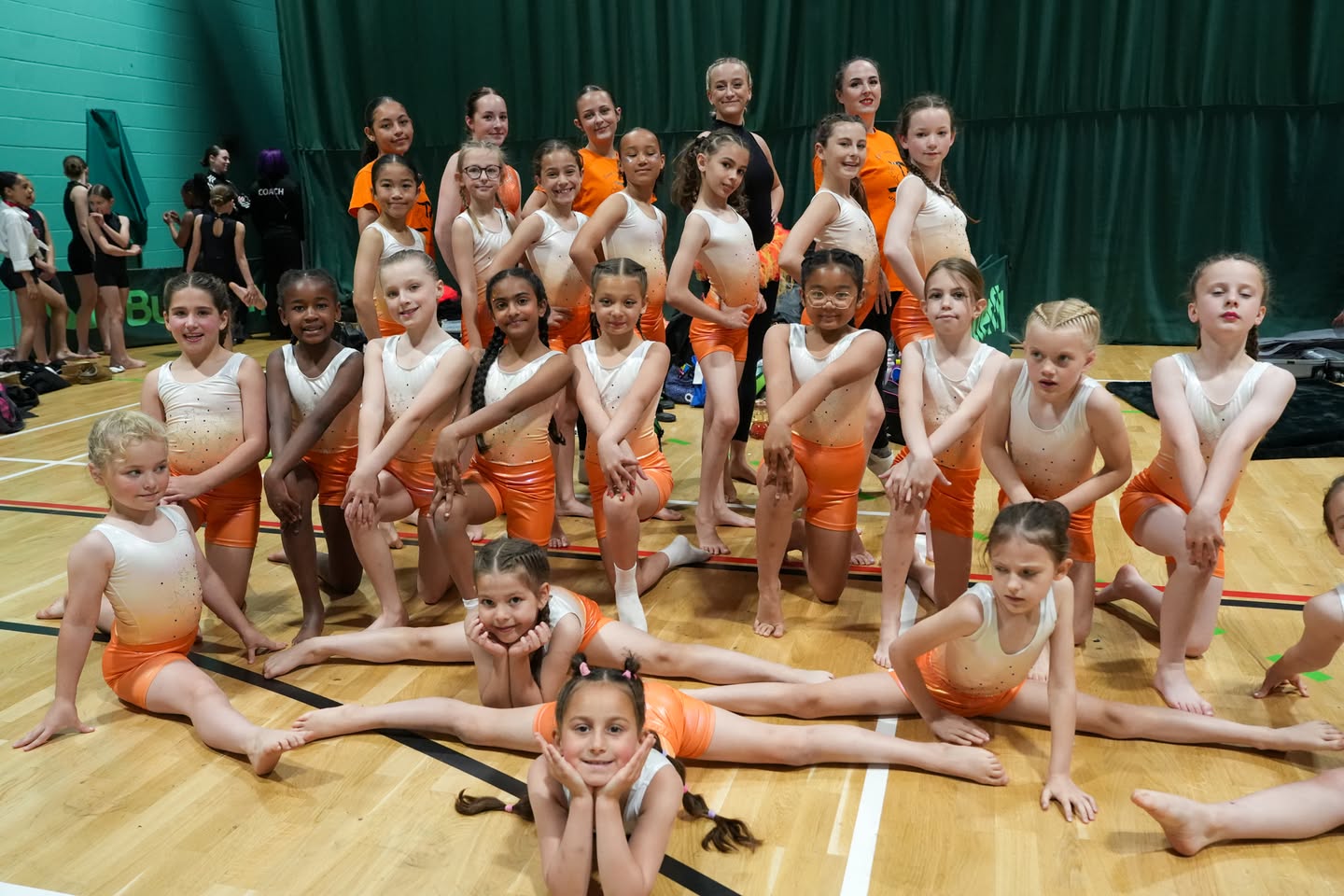
Swan Academy's Junior Squad brought their best to Flip Fest 2026 and walked away with the Best Choreography award. A proud day for the girls and the whole club.
Swan Academy's Junior Squad brought their best to Flip Fest 2026 and walked away with the Best Choreography award. A proud day for the girls and the whole club.

Looking for gymnastics in Stevenage, Hitchin, Arlesey or the surrounding Hertfordshire area? Discover the benefits of returning to gymnastics, useful back-to-school tips and essential kit to help your child begin the new term with confidence.
Looking for gymnastics in Stevenage, Hitchin, Arlesey or the surrounding Hertfordshire area? Discover the benefits of returning to gymnastics, useful back-to-school tips and essential kit to help your child begin the new term with confidence.
Discover why Great Britain has become one of the world’s leading gymnastics nations, how gymnastics benefits children and how to find September classes near Stevenage, Hitchin, Arlesey and North Hertfordshire.
Swan Academy's Junior Squad brought their best to Flip Fest 2026 and walked away with the Best Choreography award. A proud day for the girls and the whole club.